How to read a colored-stone report
Updated · SOUHAIT GEMS editorial
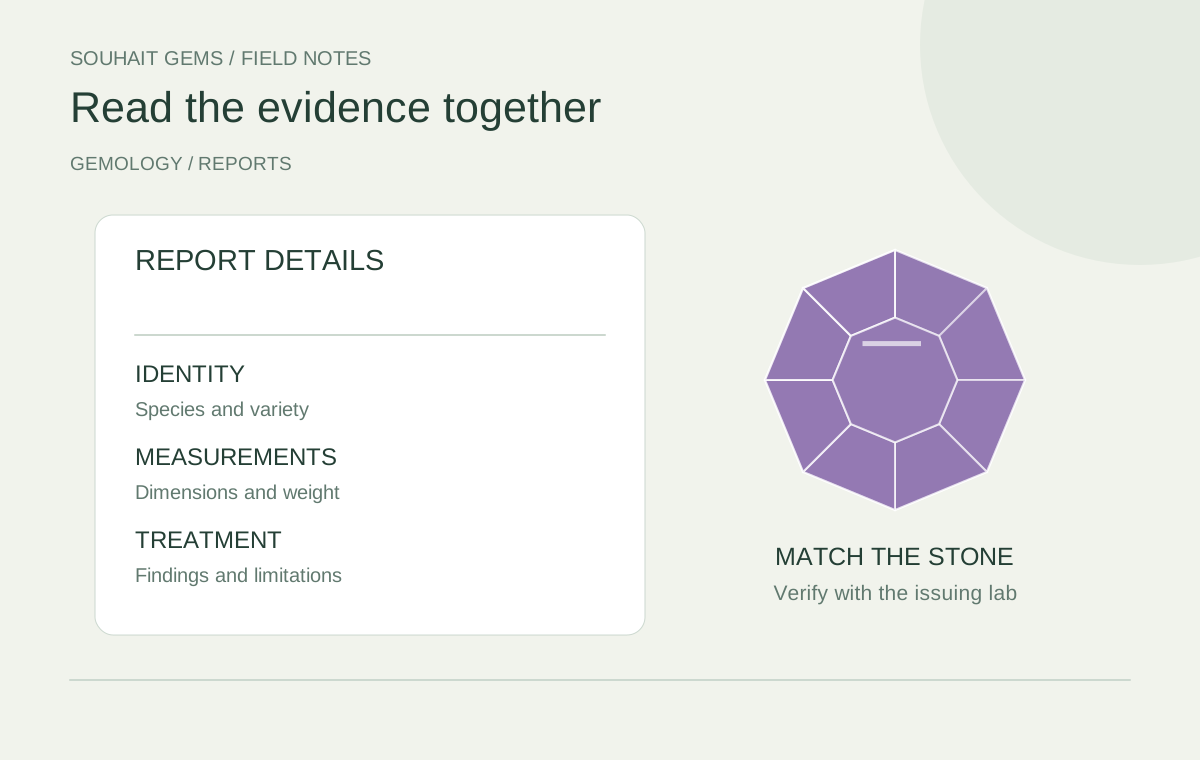
Illustration: SOUHAIT GEMS. View larger ↗
A laboratory report helps establish what a stone is. Read the name of the issuing laboratory, report number, dimensions, weight, photograph and treatment findings together.
Identity and treatment
Laboratories use observation and instruments to investigate a stone. Depending on the report and material, findings may address species, variety, natural or laboratory-grown origin, and detectable treatments. Geographic origin is a separate question and may not always be determinable.
Match the report to the stone
Compare the recorded characteristics with the offered stone and ask the laboratory how to verify its report. A matching report number alone does not establish that a loose document accompanies the correct gem.
Ask before paying
Confirm which laboratory will issue an optional report and what service is included. Do not infer that a report offered by a retailer will be a GIA report. Educational references to GIA on this website do not identify the laboratory used for a product.
Source: GIA: How GIA Analyzes Colored Stones.