Tourmaline: why color changes with direction
Updated · SOUHAIT GEMS editorial
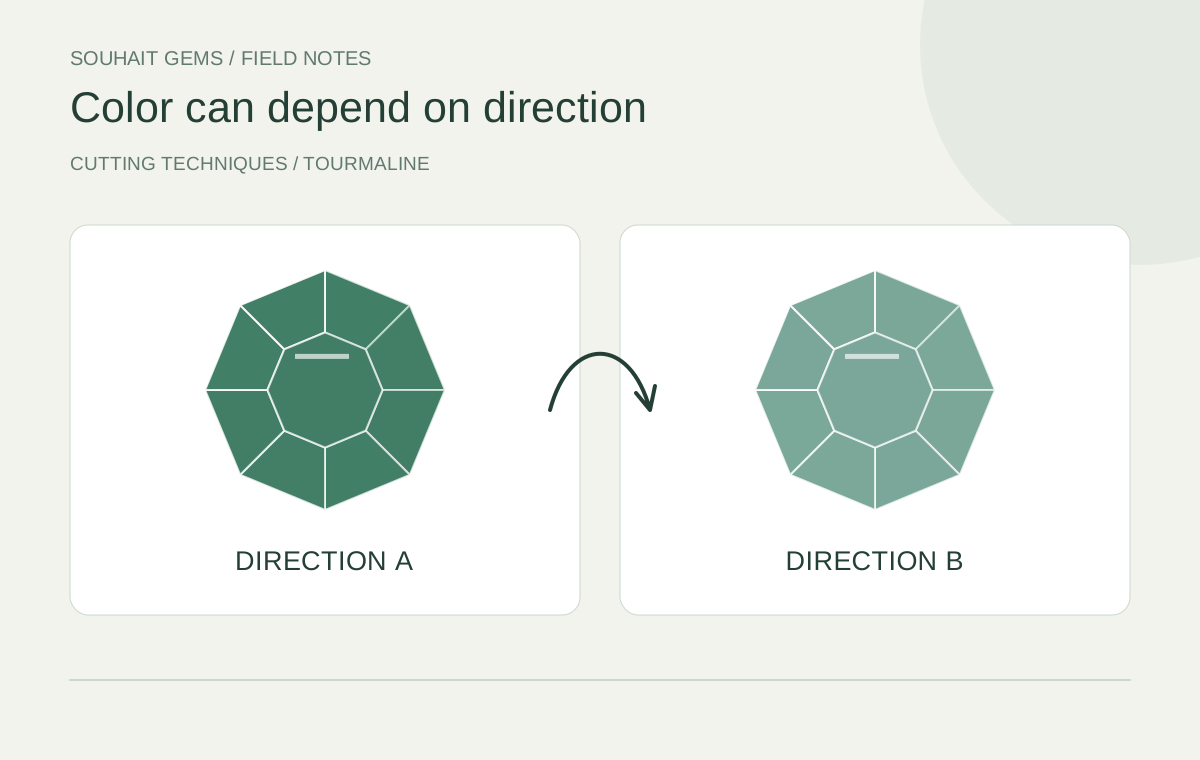
Illustration: SOUHAIT GEMS. View larger ↗
Tourmaline offers a wide range of colors. In many green tourmalines, the color seen along one direction differs from the color along another. This directional behavior is called pleochroism.
Why cutters consider orientation
A cutter chooses an orientation that affects the colors visible in the finished stone. The outline alone does not explain the result. Color, the rough crystal and the planned proportions all influence the cutting decision.
What to request online
Ask for views with the stone moving under consistent lighting. Compare how the center and ends appear rather than judging a single bright frame. For a pair, request both stones together.
Names such as rubellite and Paraíba carry specific trade context. Ask what supports the description and whether a laboratory report is available when that distinction matters to the purchase.
Choose the individual stone’s appearance, supported by measurements and disclosures, rather than expecting a name to define every visual quality.
Source: GIA: Tourmaline Quality Factors.